-3.png)
Bearing Witness in Silence: An Encounter with Inferior Shadows
I watched Inferior Shadows during the Doc.Berlin Documentary Film Festival. When the credits stopped rolling, no one moved. No applause, no murmurs—just a room full of people looking at each other, quietly aware that we had witnessed something rare. The film is beautifully shot, but brutally so; tender in its attention, devastating in what it reveals. Long after the screening, its images stayed with me. It felt necessary to speak with the filmmaker Ramin Khalighi —not to decode the film, but to understand the gaze behind it.
What follows is a conversation about restraint, dignity, and the quiet force of documentary cinema.

Living on the Edge of Visibility
Inferior Shadows follows Parvin and Rasoul, who have moved to a larger city with Parvin’s younger brother, Amir Ali. They survive on the margins—struggling with addiction, poverty, and instability—scavenging their way through days that offer little promise of escape. It is a film about lives slipping away, but never reduced to symbols or case studies.
The director approaches this world not as an outsider looking in, but as someone who has spent years paying attention.
“For over ten years, I regularly visited one of the oldest neighborhoods, Sang-e Siah, in Shiraz,” the filmmaker explains. “I photographed its residents and slowly gained a deep understanding of the struggles they face—addiction, child labor, illegal immigration, prostitution, poverty.”
Meeting Parvin and Rasoul during this long period of observation became the foundation for what would eventually grow into a feature-length documentary. Though rooted in a specific place, the filmmaker was careful not to exoticize or isolate their experience.
“While the film is deeply local, I tried to approach their lives in a way that speaks to broader, universal human experiences.”
Resisting the Obvious
One of the film’s most striking qualities is what it refuses to do. There are no dramatic arcs imposed from the outside, no forced moments of redemption or collapse. This restraint was not incidental—it was the central challenge.
“These lives have been shown many times before, often through the same familiar frames,” the director says. “The real challenge was to find a non‑clichéd perspective while staying honest.”
That meant avoiding sentimentality and letting meaning surface through everyday moments. The camera does not insist; it waits. The film trusts duration, silence, and repetition—choices that feel increasingly radical in a media landscape addicted to immediacy.
Working in Sang-e Siah also meant navigating real danger and instability. The filmmaker is quick to credit collaborators who made the film possible under such conditions, particularly cinematographer Mohammad Aghamohammadi and researcher Mohammad Nasiri, who were present throughout every stage of the process. Financial limitations, too, shaped the film—but not in ways that compromised its integrity.
“Choosing honesty over spectacle wasn’t just an aesthetic decision,” the director reflects. “Given our resources, it was the only possible one.”
Being Seen, If Only Briefly
A question that often haunts documentaries about social precarity is why people agree to share their lives on camera. The answer here is both simple and unsettling.
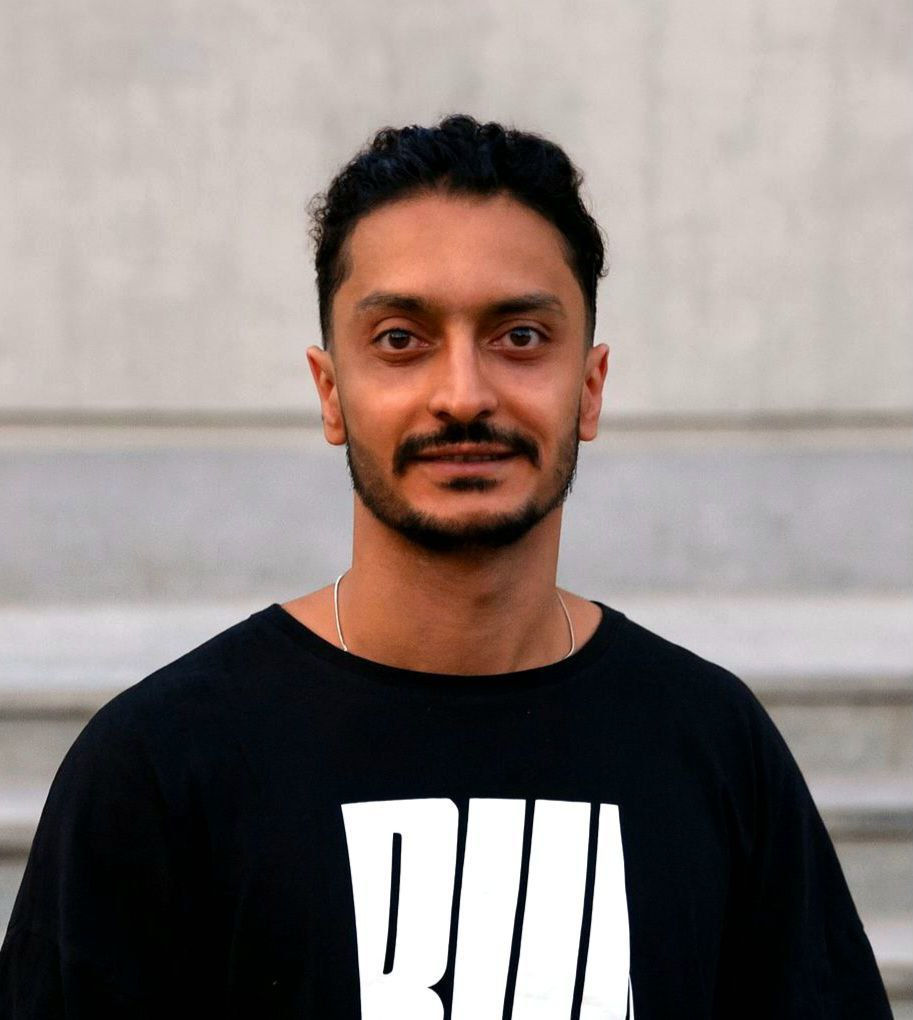
“Socially disadvantaged people often want, above all, to be seen and heard,” the filmmaker says. “When they feel respected, they respond with openness.”
For Parvin, Rasoul, and Amir Ali, telling their story offered a temporary sense of release—almost therapeutic. But the film never pretends that storytelling alone can change material reality.
“The harshness of their lives quickly erases any lasting catharsis,” the director admits. “That contradiction is part of the truth.”
Cinema Against Erasure
The director’s path into filmmaking began early—through cinema and photography courses taken alongside studies in Urban Design, followed by editorial work, translation, and eventually a Master’s degree in Cinema in Tehran. What emerges clearly is a commitment to observation as a form of ethics.
That commitment continues into future work.
“I’m interested in documentaries that draw on the aesthetics of narrative cinema, while remaining grounded in real lives,” the filmmaker explains. “Especially now, when AI can generate convincing images, this kind of filmmaking can only grow stronger. It’s something AI cannot replace—because it contradicts the nature of documentary itself.”
The Role of Festivals—and Letting Go
Film festivals have played a crucial role in the life of Inferior Shadows, not only as exhibition platforms but as spaces of recognition and encounter.
“They make the path forward feel a little less lonely,” the director says. “And they expose filmmakers to new voices and perspectives.”
At the same time, there is a healthy detachment in how the filmmaker approaches the festival circuit.
“Send your film out, then return to your life and focus on the next work,” they conclude. “Hold on to the idea that there are still people and festivals that care about films regardless of names, budgets, or backgrounds.”
Festival Selections & Awards
Winner – Best Debut Documentary, DokuBaku International Documentary Film Festival (2025)
Best Feature Documentary Film, Doc.Berlin Documentary Film Festival (2025)
Inferior Shadows is not a film that demands attention—it earns it. Quiet, uncompromising, and deeply humane, it reminds us that some of the most important cinema doesn’t raise its voice. It simply refuses to look away.
Berlin, Kris De Meester during Doc.Berlin


The way you explored silence and presence in the encounter made the experience feel vivid and contemplative, inviting readers to slow down and consider the subtleties of perception and memory. Your clear articulation of complex themes allowed the piece to resonate without feeling abstract or inaccessible. I recently came across a similar discussion on https://www.phonydiploma.com/ that examined interpretation and creative expression in storytelling, and it offered an interesting perspective as well. Overall, this was a beautifully written and thought‑provoking article that stays with the reader long after finishing.
I read the article about bearing witness in silence and the way it talked about seeing hard stories made me think how quiet moments can carry a lot of weight in art and life. One time when I was really stuck on a big school page I had to Pay Someone to Blog Posts Writing Service to finish my writing before class time, and that taught me how clear words help tell deep ideas. It made me think that sharing quiet stories helps us feel connected.